This week’s travel theme given by Ailsa from “Where’s My Backpack?” is the word “HIDDEN”. Why don’t you sneak on over to her blog and find some other “hidden” posts! http://wheresmybackpack.com/2013/09/06/travel-theme-hidden/
Here are my thoughts on the matter
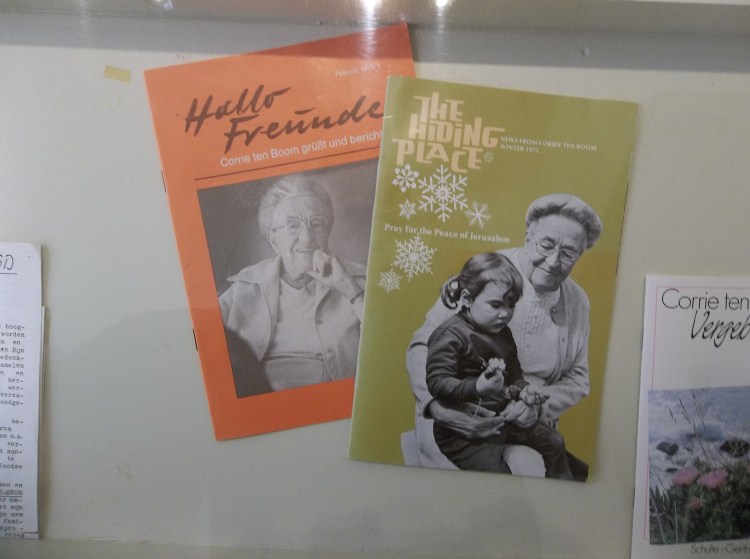
Corrie Ten Boom Museum, Haarlem The Netherlands
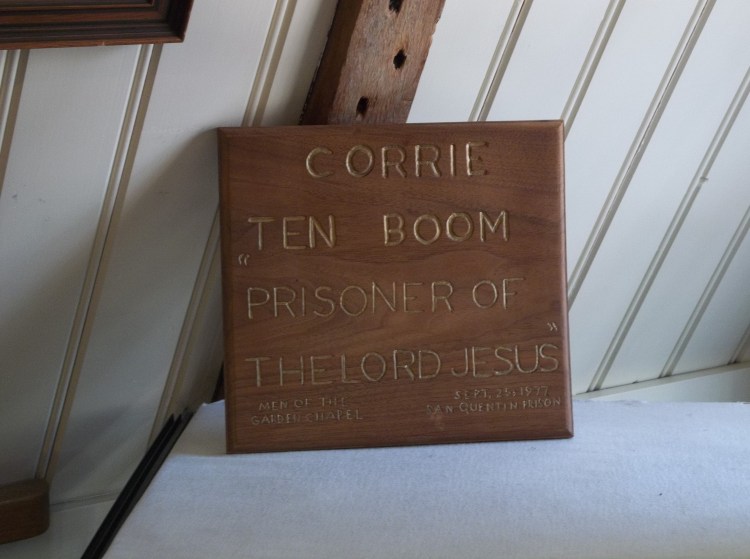
Corrie Ten Boom was taken prisoner by the Nazi’s for hiding Jews in her home.
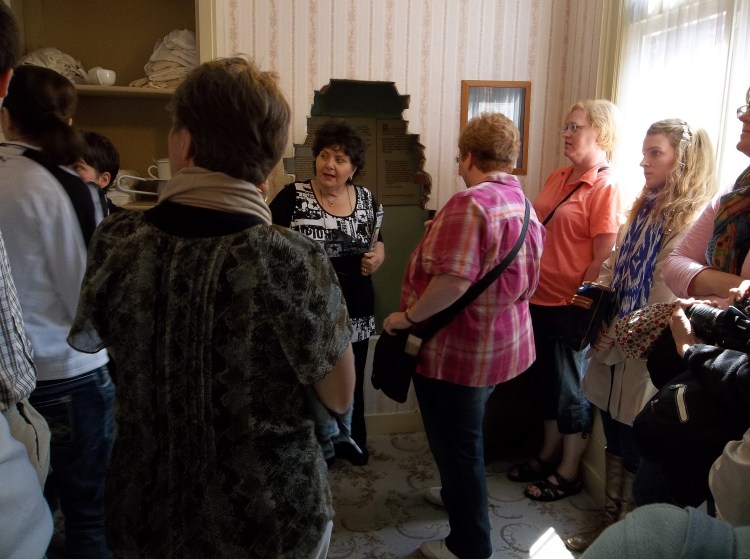
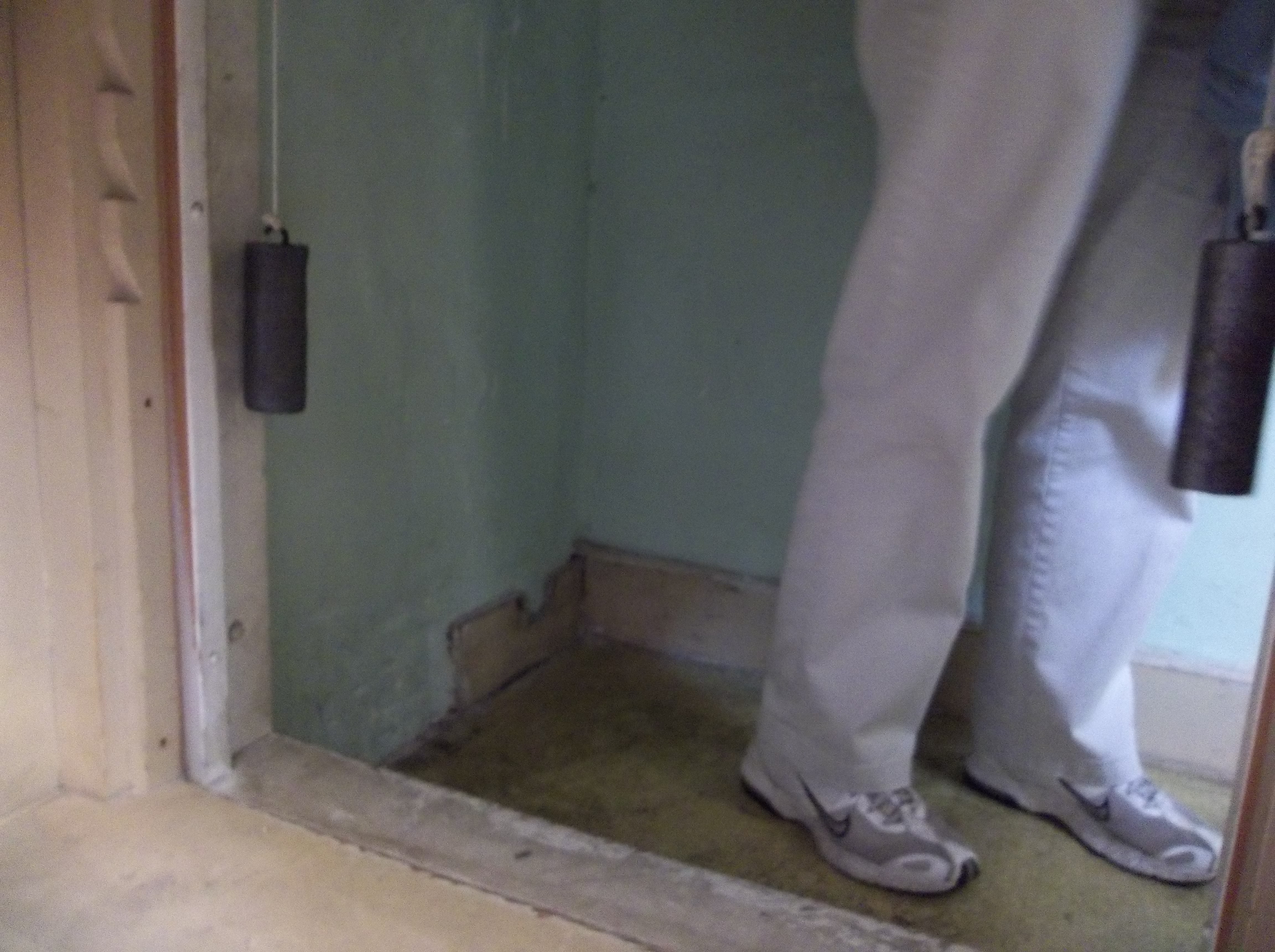
The Hiding Place (cut out in the back wall)

The entrance to the Hiding Place (not even waist high) 6 people had to get in in 90 seconds
Corrie ten Boom grew up in Haarlem in Amsterdam and was the youngest of four children, born to parents Casper (1859–1944) and Cornelia (died 1921 of a cerebral haemorrhage). She had two other sisters, Betsie ten Boom (died 1944 in the Ravensbrück death camp) and Nollie (died in 1953). Her brother, Willem ten Boom, was born in 1887 and died in 1946 of spinal tuberculosis. Corrie’s three maternal aunts also lived with her family. Bep died in the early 1920s, of tuberculosis; Jans died in the mid-1920s, of diabetes; and Anna, who took care of the children after the death of their mother, was the last to die, in the early 1930s.
Corrie’s father worked as a watchmaker; a profession that she followed in becoming the first licensed female watchmaker in the Netherlands in 1924. Corrie and her sister Betsie never married and had lived their entire lives (until their arrest) in their childhood home in Haarlem. Corrie ten Boom also ran a church for people with mental disabilities, raised foster children in their home, and did other charitable works.
In 1940, the Nazis invaded the Netherlands. Among their restrictions was banning a club which ten Boom had run for young girls.In May 1942 a well-dressed woman came to the ten Boom door with a suitcase in hand. She told the ten Booms that she was a Jew and that her husband had been arrested several months before and her son had gone into hiding. As Occupation authorities had recently visited her, she was afraid to return home. Having heard that the ten Booms had helped their Jewish neighbors, the Weils, she asked if she might stay with the family. ten Boom’s father readily agreed. A devoted reader of the Old Testament, Casper believed Jews were the ‘chosen people‘, and he told the woman, “In this household, God’s people are always welcome.”The family then became very active in the Dutch underground hiding refugees They provided kosher food for the Jewish refugees who stayed with them and honored the Jewish Sabbath.
Thus the ten Booms began “the hiding place”, or “de schuilplaats”, as it was known in Dutch (also known as “de Béjé”, pronounced in Dutch as ‘bayay’, an abbreviation of the name of the street the house was in, the Barteljorisstraat). Corrie ten Boom and sister Betsie began taking in refugees — both Jews and others who were members of the resistance movement, being sought by the Gestapo and its Dutch counterpart. While they had extra rooms in the house, food was scarce for everyone, due to wartime shortages. Every non-Jewish Dutch person had received a ration card, which was required to obtain weekly coupons to buy food.
Thanks to her charitable work, ten Boom knew many people in Haarlem and remembered a couple who had a disabled daughter. The father was a civil servant, who by then was in charge of the local ration-card office. She went to his house one evening; when he asked how many ration cards she needed, “I opened my mouth to say, ‘Five,'” ten Boom wrote in The Hiding Place. “But the number that unexpectedly and astonishingly came out instead was: ‘One hundred.'”He gave them to her, and she provided cards to every Jewish person whom she met.
Secret room
Because of the number of people using their house, the family built a secret room, in case a raid took place. They decided to build it in ten Boom’s bedroom; as it was in the highest part of the house, people trying to hide would have the most time to avoid detection (as a search would start on the ground floor). A member of the Dutch resistance designed the hidden room behind a false wall. Gradually, family and supporters brought building supplies into the house, hiding them in briefcases and rolled-up newspapers. When finished, the secret room was about 30 inches (76 cm) deep, the size of a medium wardrobe. A ventilation system allowed for breathing. To enter the secret room, a person had to open a sliding panel in the plastered brick wall under a bottom bookshelf and crawl in on hands and knees. In addition, the family installed an electric buzzer for warning in a raid. When the Nazis raided the ten Boom house in 1944, six people were using the hiding place to evade detection.
Arrest, detention, and release
On February 28, 1944, a Dutch informant told the Nazis of the work the ten Booms were doing, and the Nazis arrested the entire ten Boom family at around 12:30 p.m. The family was sent first to Scheveningen prison, where their elderly father died ten days after his arrest. While there, ten Boom’s sister Nollie, brother Willem, and nephew Peter were all released. Later, ten Boom and sister Betsie were sent to the Vught political concentration camp, and finally to the Ravensbrück death camp in Germany. Betsie died there on December 16, 1944. Before she died, she told ten Boom, “There is no pit so deep that He [God] is not deeper still.”[page needed]
Corrie ten Boom was released on December 28, 1944. In the movie The Hiding Place, she narrates the section on her release from camp, saying that she later learned that her release had been a clerical error. She said, “God does not have problems — only plans.” The Jews whom the ten Booms had been hiding at the time of their arrests remained undiscovered and all but one, an old woman named Mary, survived.– Information courtesy of Wiki pedia














 Lillie-Put