Learn more about the artist Dwight Beal Here.
Saint Patrick (Latin: Patricius; Irish: Pádraig [ˈpˠaːd̪ˠɾˠəɟ]; Welsh: Padrig) was a fifth-century Romano-British Christian missionary and bishop in Ireland. Known as the “Apostle of Ireland”, he is the primary patron saint of Ireland, the other patron saints being Brigit of Kildare and Columba. He is venerated in the Catholic Church, the Anglican Communion, the Lutheran Churches, the Old Catholic Church, and in the Eastern Orthodox Church as equal-to-the-apostles and Enlightener of Ireland.[2]
The dates of Patrick’s life cannot be fixed with certainty, but there is broad agreement that he was active as a missionary in Ireland during the fifth century. Nevertheless, as the most recent biography[3] on Patrick shows, a late fourth-century date for the saint is not impossible.[4] Early medieval tradition credits him with being the first bishop of Armagh and Primate of Ireland, and they regard him as the founder of Christianity in Ireland, converting a society practising a form of Celtic polytheism. He has been generally so regarded ever since, despite evidence of some earlier Christian presence in Ireland.
According to Patrick’s autobiographical account, known as the Confessio, when he was about sixteen years old, he was captured by Irish pirates from his home in Britain and taken as a slave to Ireland, looking after animals; by his account, he lived there for six years before escaping and returning to his family in Britain, where he became a cleric. He was initially welcomed by his relatives with open arms, but in chapters 26, 27 of his Confessio he describes that he was subsequently condemned for an offence for which he had already stood trial, although he does not say what it was. The condemnation might have contributed to his decision to return to Ireland. According to Patrick’s most recent biographer, Roy Flechner, the Confessio was written in part as a defence against his detractors, who did not believe that he was taken to Ireland as a slave, despite Patrick’s vigorous insistence that he was.[5] Patrick eventually returned to Ireland, probably settling in the west of the island, where, in later life, he became a bishop and ordained subordinate clerics.
Saint Patrick’s Day is observed on 17 March, the supposed date of his death. It is celebrated inside and outside Ireland as a religious and cultural holiday. In the dioceses of Ireland, it is both a solemnity and a holy day of obligation; it is also a celebration of Ireland itself. From Wiki-Pedia





 Where they have left not one stone on a stone,
But they would have the rabbit out of hiding,
To please the yelping dogs. The gaps I mean,
No one has seen them made or heard them made,
But at spring mending-time we find them there.
Where they have left not one stone on a stone,
But they would have the rabbit out of hiding,
To please the yelping dogs. The gaps I mean,
No one has seen them made or heard them made,
But at spring mending-time we find them there.
 I let my neighbor know beyond the hill;
And on a day we meet to walk the line
And set the wall between us once again.
We keep the wall between us as we go.
To each the boulders that have fallen to each.
I let my neighbor know beyond the hill;
And on a day we meet to walk the line
And set the wall between us once again.
We keep the wall between us as we go.
To each the boulders that have fallen to each.
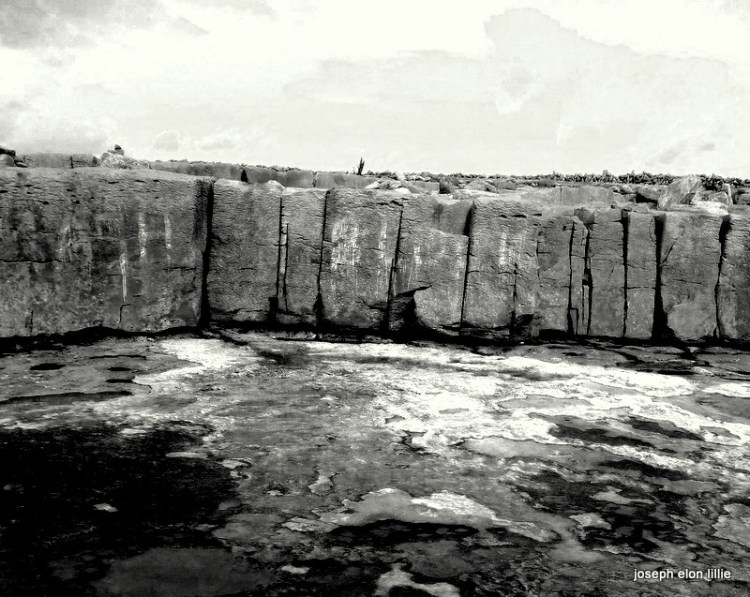 And some are loaves and some so nearly balls
We have to use a spell to make them balance:
‘Stay where you are until our backs are turned!'
We wear our fingers rough with handling them.
Oh, just another kind of outdoor game,
One on a side. It comes to little more:
There where it is we do not need the wall:
He is all pine and I am apple orchard.
My apple trees will never get across
And eat the cones under his pines, I tell him.
He only says, ‘Good fences make good neighbors.'
Spring is the mischief in me, and I wonder
If I could put a notion in his head:
'Why do they make good neighbors? Isn’t it
Where there are cows? But here there are no cows.
Before I built a wall I’d ask to know
What I was walling in or walling out,
And to whom I was like to give offense.
Something there is that doesn’t love a wall,
And some are loaves and some so nearly balls
We have to use a spell to make them balance:
‘Stay where you are until our backs are turned!'
We wear our fingers rough with handling them.
Oh, just another kind of outdoor game,
One on a side. It comes to little more:
There where it is we do not need the wall:
He is all pine and I am apple orchard.
My apple trees will never get across
And eat the cones under his pines, I tell him.
He only says, ‘Good fences make good neighbors.'
Spring is the mischief in me, and I wonder
If I could put a notion in his head:
'Why do they make good neighbors? Isn’t it
Where there are cows? But here there are no cows.
Before I built a wall I’d ask to know
What I was walling in or walling out,
And to whom I was like to give offense.
Something there is that doesn’t love a wall,
 That wants it down.' I could say ‘Elves’ to him,
But it’s not elves exactly, and I’d rather
He said it for himself. I see him there
Bringing a stone grasped firmly by the top
In each hand, like an old-stone savage armed.
He moves in darkness as it seems to me,
Not of woods only and the shade of trees.
He will not go behind his father’s saying,
And he likes having thought of it so well
He says again, ‘Good fences make good neighbors.'
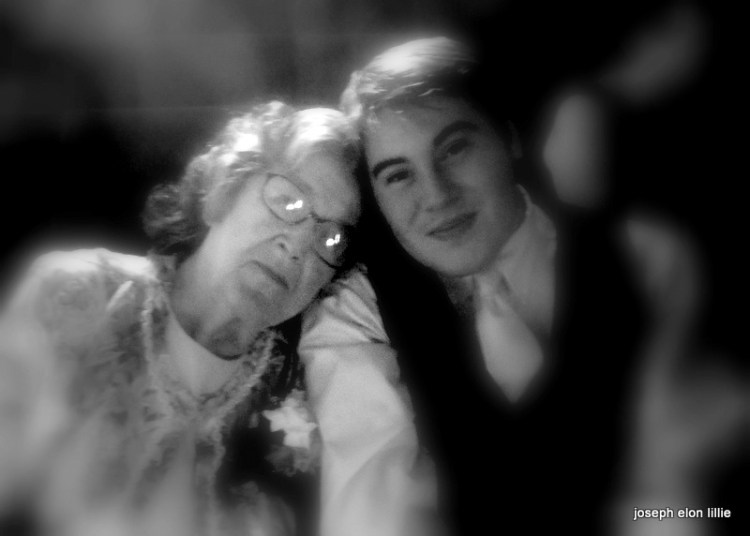
When I saw Cee's Black & White Challenge
That wants it down.' I could say ‘Elves’ to him,
But it’s not elves exactly, and I’d rather
He said it for himself. I see him there
Bringing a stone grasped firmly by the top
In each hand, like an old-stone savage armed.
He moves in darkness as it seems to me,
Not of woods only and the shade of trees.
He will not go behind his father’s saying,
And he likes having thought of it so well
He says again, ‘Good fences make good neighbors.'
When I saw Cee's Black & White Challenge